
Engineering inspection block insurance is a specialist UK product that combines mandatory statutory equipment inspections with breakdown cover to protect blocks of flats from operational failures and financial loss. For property owners, managers, and developers, it is not optional. Regulations including LOLER (Lifting Operations and Lifting Equipment Regulations), PSSR (Pressure Systems Safety Regulations), and the Electricity at Work Regulations (EAWR) impose legal duties to inspect engineering plant at defined intervals. Failing to comply exposes you to enforcement action, voided claims, and penalties reaching £40,000. This guide explains what the cover includes, how to procure it correctly, and how to avoid the compliance traps that catch even experienced property managers.
What does engineering inspection block insurance cover?
Combined engineering insurance bundles two distinct products: statutory inspection services and breakdown insurance. The inspection component fulfils your legal duty to have plant examined by a competent person. The breakdown component pays for sudden mechanical or electrical failure of covered equipment. Premia vary from £5,000 to over £200,000 depending on operator size and plant volume. That range reflects how much the scope of cover depends on what equipment your block contains.
The inspection side covers the following plant categories:
- Lifts and hoists under LOLER, which requires thorough examination every six months for passenger lifts.
- Pressure systems such as boilers and pressurised hot water vessels under PSSR, with intervals set by a written scheme of examination.
- Electrical installations under EAWR and BS 7671, requiring an Electrical Installation Condition Report (EICR) every five years for residential rented properties.
- Mechanical plant including air handling units, pumps, and emergency generators where applicable.
Statutory thorough examinations under LOLER, PSSR, and EAWR are legal requirements, not insurer preferences. Examination intervals are set by regulation and confirmed through written schemes of examination. This distinction matters: the insurer does not set the frequency. The law does.
Pro Tip: Request a full plant schedule from your managing agent before approaching insurers. Knowing exactly what equipment your block contains prevents gaps in coverage from day one.
Inspection services bundled with insurance are performed by insurer-employed engineering surveyors. These surveyors also act as loss adjusters when a claim arises, which speeds up claims processing and reduces disputes between the inspection record and the claim. That alignment of incentives is one of the strongest practical arguments for choosing a combined policy over separate inspection and insurance contracts.

How to procure and manage your policy effectively
Getting the right cover starts with understanding exactly what plant your block contains. A poorly compiled plant schedule is the single most common reason for coverage gaps.
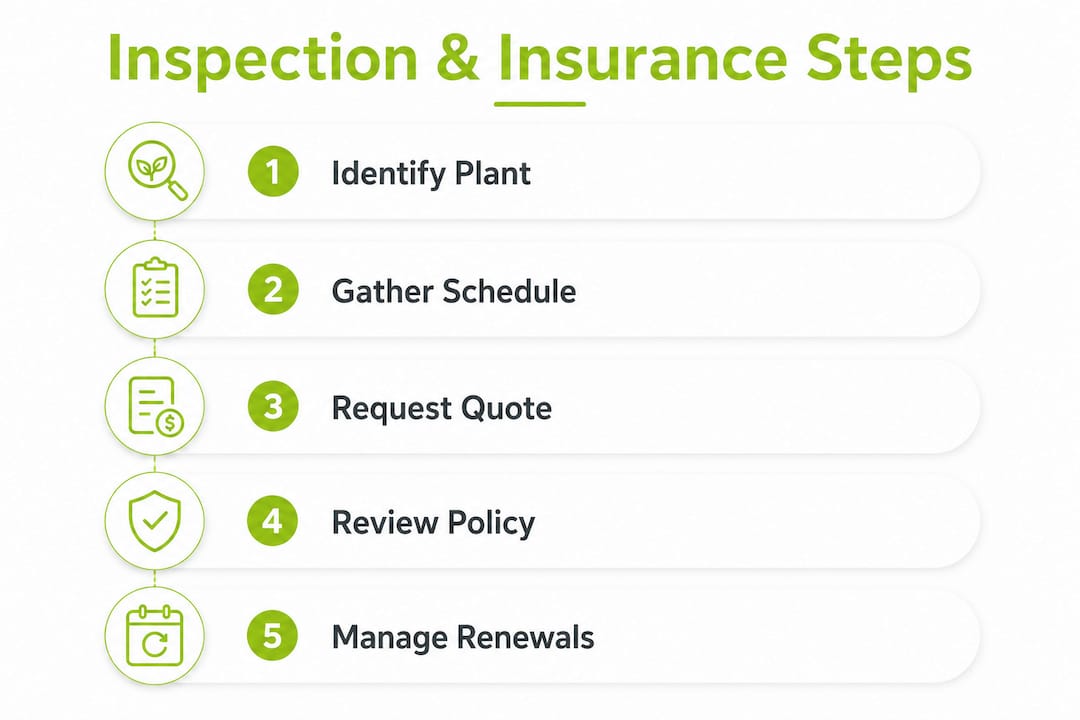
- Compile a full plant schedule. List every piece of engineering plant: lifts, boilers, electrical distribution boards, emergency lighting systems, and any communal mechanical equipment. Include make, model, serial number, and last inspection date.
- Match inspection frequencies to statutory requirements. Passenger lifts need examination every six months. Pressure systems follow intervals set by a written scheme. EICR certificates must be issued every five years by a qualified electrician registered with a recognised body such as NICEIC or NAPIT.
- Select coverage based on your plant schedule. Share the completed schedule with your broker. The schedule determines which statutory inspections are required and what breakdown cover is needed.
- Consolidate inspection due dates. Where possible, align inspection dates across multiple assets to simplify administration and reduce the risk of missing a deadline.
- Maintain a compliance file. Keep all inspection certificates, defect reports, and records of remedial work in one place. Insurers review this documentation during claims investigations.
The table below shows the key statutory inspections, their regulatory basis, and standard frequency for residential blocks.
| Plant type | Regulation | Standard frequency |
|---|---|---|
| Passenger lifts | LOLER | Every 6 months |
| Pressure vessels and boilers | PSSR | Per written scheme of examination |
| Electrical installations (EICR) | EAWR / BS 7671 | Every 5 years (residential rented) |
| Emergency lighting | BS 5266 | Annual full duration test |
Working with a specialist broker rather than a general insurer gives you access to tailored advice on which plant requires cover and at what level. Flatinsurance works with property owners, RMCs, and RTM companies to build policies that match the actual equipment in a block, not a generic template. You can review the landlord buildings insurance checklist to cross-reference your compliance obligations before renewing.
Pro Tip: Ask your broker to confirm that every item on your plant schedule appears explicitly in the policy schedule. Orphan equipment, plant that exists but is not listed, is a common source of refused claims.
What are the most common compliance pitfalls?
Most compliance failures in engineering inspection block insurance are not caused by ignorance of the law. They are caused by poor administration.
- Missed inspection deadlines. A lift not examined within its statutory interval is non-compliant regardless of its condition. The insurer can refuse a related claim, and the Health and Safety Executive (HSE) can take enforcement action.
- Unrepaired electrical defects. Insurers require remediation of C1 (danger present) and C2 (potentially dangerous) defects within 28 days of identification. An unrepaired defect is grounds for a refused claim even if the defect did not directly cause the incident.
- Confusing inspection with insurance. A valid inspection certificate does not guarantee claims payment. The certificate confirms the examination took place. Payment depends on whether identified defects were remediated within the required timescale.
- Inadequate contractor records. If a contractor carries out remedial work but leaves no written record, the insurer has no evidence the defect was resolved. Always obtain a signed completion report.
- Orphan equipment. Plant added to a block after the policy inception, such as a new boiler or additional lift, must be added to the policy schedule immediately. Undeclared plant is uninsured plant.
“Electrical compliance is often underestimated, but insurers evaluate inspection documentation closely during claims investigations. A certificate alone is not enough. The remediation record is what protects you.”
Non-compliance penalties for electrical inspection failures can reach £40,000, with increased enforcement expected from 2026 onwards. That figure applies per property, not per portfolio. For a portfolio landlord managing multiple blocks, the cumulative exposure is substantial.
How to optimise risk management and insurer relationships
Proactive risk management does more than keep you compliant. It directly affects the terms and cost of your cover.
- Document your maintenance regime. Insurers are more favourable to property owners who demonstrate active risk management through a written preventive maintenance programme. Record every service visit, contractor name, and work completed.
- Verify contractor qualifications. For electrical work, use only NICEIC or NAPIT registered electricians. For lift maintenance, use contractors accredited under LEIA (Lift and Escalator Industry Association) standards. Unqualified contractors produce certificates that insurers may reject.
- Use a consolidated plant schedule across your portfolio. A single inspection schedule mapping all equipment across multiple properties prevents missed inspections and coverage gaps caused by orphan equipment. Portfolio landlords who manage this centrally consistently achieve better renewal terms.
- Align your insurer and inspection provider. The combined engineering insurance model places the inspection surveyor and the insurer on the same side. This alignment reduces the friction that arises when a separate inspection company’s report conflicts with an insurer’s loss adjuster assessment.
- Review your plant schedule annually. Equipment ages, gets replaced, or gets added. An annual review of the schedule against the policy ensures you are never paying to insure plant that no longer exists, and never leaving new plant uninsured.
RTM companies and RMCs carry legal responsibility for the block’s compliance, not just the managing agent. If you manage a block through an RTM structure, the RTM insurance obligations include engineering inspection cover as a core component, not an optional add-on.
Pro Tip: Before each renewal, prepare a one-page risk management summary for your broker. List completed inspections, remediated defects, and any plant upgrades. Insurers reward documented diligence with better terms.
Key takeaways
Engineering inspection block insurance is a legal compliance tool and a financial safeguard. Blocks that combine statutory inspections with breakdown cover, maintain complete documentation, and remediate defects promptly are far less likely to face refused claims or regulatory penalties.
| Point | Details |
|---|---|
| Statutory inspections are legally required | LOLER, PSSR, and EAWR set inspection frequencies. Insurers do not. |
| Combined policies reduce claims disputes | Insurer-employed surveyors act as loss adjusters, aligning inspection and claims roles. |
| Defect remediation protects claims | C1 and C2 electrical defects must be fixed within 28 days or claims can be refused. |
| Plant schedules prevent coverage gaps | Every piece of equipment must appear on the policy schedule, including additions after inception. |
| Documentation improves renewal terms | A written maintenance regime and contractor records give insurers evidence of active risk management. |
Why I think most blocks are one missed inspection away from a serious problem
After years of working with property owners across the UK, the pattern I see most often is not wilful non-compliance. It is administrative drift. A lift inspection falls due in march, the managing agent changes in april, and by june nobody is sure whether the examination happened. The certificate exists somewhere. The defect report may or may not have been acted on. When a claim arises in september, the insurer asks for documentation that nobody can locate.
The integrated inspection-insurance model solves this problem structurally, not just procedurally. When the same organisation conducts the inspection and underwrites the risk, there is no gap between the inspection record and the claims file. That is not a minor administrative convenience. It is a fundamental change in how risk is managed.
What I find underappreciated is that the inspection certificate is not the end of the compliance process. It is the beginning. The certificate identifies what needs fixing. The remediation record is what actually protects you. Property owners who treat the certificate as the finish line are the ones who get caught out at claims time.
The trend I am watching in 2026 is increased HSE enforcement activity around electrical compliance, particularly in residential blocks with multiple landlords. The £40,000 penalty threshold is not theoretical. Enforcement is becoming more consistent, and insurers are adjusting their risk appetite accordingly. Blocks with clean documentation and a proactive maintenance record will find renewal straightforward. Blocks that cannot produce a coherent compliance file will face harder questions and higher premiums.
— Thomas
How Flatinsurance can help with your block’s engineering cover
Flatinsurance specialises exclusively in insurance for blocks of flats, which means engineering inspection cover is a core part of what the team handles every day, not a peripheral product.

Whether you manage a single block or a portfolio of residential properties, Flatinsurance can help you build a policy that covers your specific plant schedule, meets your statutory obligations under LOLER, PSSR, and EAWR, and integrates inspection services with breakdown cover. The team includes in-house RICS Chartered Surveyors who can support rebuild cost assessments alongside your engineering cover. Get a tailored quote for block of flats insurance and make sure your engineering plant is fully covered before your next inspection falls due.
FAQ
What is engineering inspection block insurance?
Engineering inspection block insurance is a combined UK insurance product that bundles statutory equipment inspections with breakdown cover for engineering plant in blocks of flats. It fulfils legal duties under LOLER, PSSR, and EAWR while providing financial protection against sudden equipment failure.
Is engineering inspection insurance a legal requirement for blocks?
Statutory inspections of lifts, pressure systems, and electrical installations are legal requirements under UK regulations. Bundling these inspections within an insurance policy is the standard method for meeting those obligations and managing the associated financial risk.
What happens if I miss a statutory inspection deadline?
A missed inspection deadline means the plant is non-compliant regardless of its physical condition. The insurer can refuse any related claim, and the HSE can take enforcement action. Penalties for electrical inspection failures can reach £40,000 per property.
Do I need a separate EICR for each flat in a block?
An EICR covers the electrical installation within its defined scope. Common parts and communal electrical systems require their own inspection. Individual flats in a rented block also require EICRs every five years under BS 7671 and EAWR, issued by a qualified electrician registered with NICEIC or NAPIT.
Can an insurer refuse a claim if defects were not repaired?
Yes. Insurers can refuse claims where C1 or C2 electrical defects identified in an EICR were not remediated within 28 days, even if those defects did not directly cause the incident. A valid certificate without a remediation record does not protect your claim.