
Conversion property insurance requirements define the minimum coverage forms, documentation standards, and valuation methods that landlords, developers, and managing agents must meet to adequately protect residential buildings converted from other uses. The industry term for this specialist cover is “converted property insurance,” and it sits firmly within the non-standard buildings insurance category. Standard home insurance policies are inadequate for these buildings. Converted properties, whether former churches, barns, offices, or warehouses, carry unique structural risks that require tailored cover, specialist underwriting, and thorough documentation from the outset.
What are the standard coverage types required for converted property insurance?
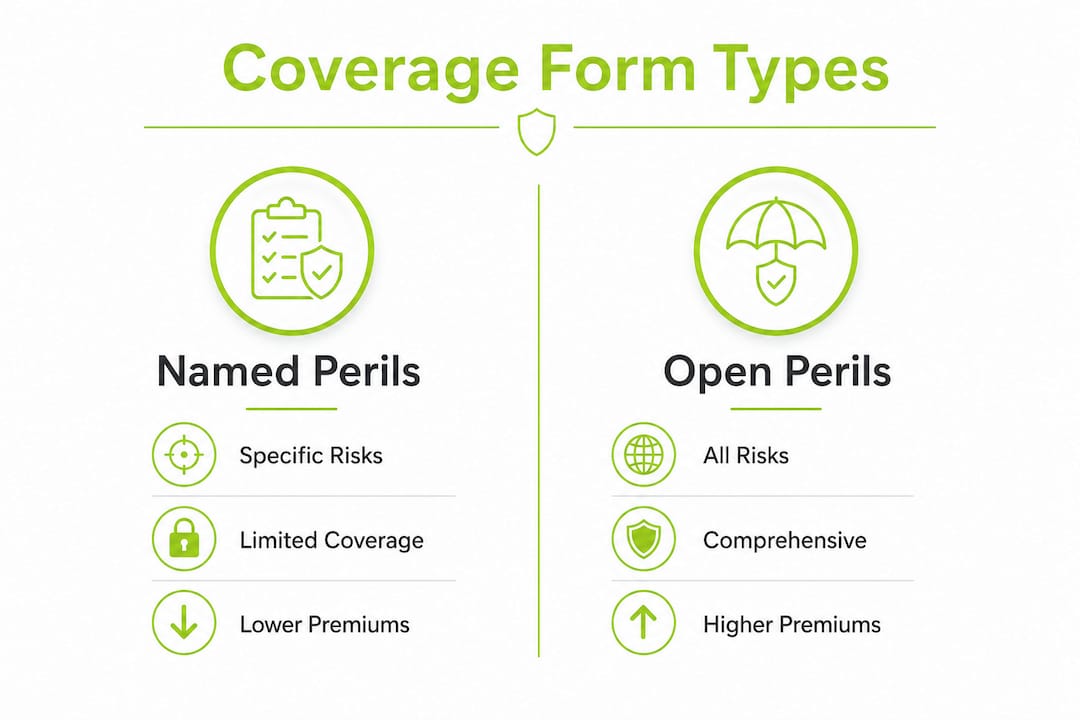
The coverage form is the single most important decision you make when insuring a converted property. Fannie Mae requires residential buildings to be insured on a “Special” coverage form, settling claims on a replacement cost basis, with coverage equal to the lesser of 100% replacement cost or the unpaid loan balance. That standard reflects what most UK mortgage lenders also expect, even where Fannie Mae guidelines do not apply directly.

Named perils vs open perils cover
Property insurance distinguishes between two fundamental approaches. Named perils policies cover only the events explicitly listed in the policy wording. Open perils policies, also called “all-risks” cover, pay for any loss except those specifically excluded. For converted properties, open perils cover is the stronger choice because the range of potential risks in a non-standard building is broader than a standard construction.
Required perils for most converted property policies include:
- Fire and smoke damage
- Windstorm and hail
- Lightning strike
- Explosion
- Riot and civil commotion
- Aircraft and vehicle impact
- Vandalism and malicious damage
- Water damage from burst pipes
Standard exclusions across most policies include routine wear and tear, mould, pest infestation, and intentional acts. Reviewing your policy exclusions carefully is not optional. A claim denied on an exclusion you did not read is a costly lesson.
Pro Tip: Ask your insurer to confirm in writing whether your policy is a “Special” or “named perils” form before you sign. The difference in claims outcomes can be substantial.
Lender requirements add another layer. Most mortgage lenders specify minimum deductible thresholds. Fannie Mae caps combined deductibles for a single incident at 5% of the total coverage amount. Exceeding that cap can breach your mortgage conditions, which puts your financing at risk.
What documentation do insurers require for converted properties?
Insurers classify converted properties as non-standard risks, and that classification triggers a higher documentation burden than a standard residential building. The documentation you provide directly influences both your premium and the validity of any future claim. Missing paperwork at claims stage is one of the most common reasons converted property claims are disputed or rejected.
The core documents insurers expect include:
- Proof of the conversion completion date
- Evidence of authorised contractors’ involvement, including any relevant trade certifications
- Building regulations compliance certificates
- Planning permission approvals and any associated conditions
- Structural surveys or engineer’s reports confirming the building’s integrity post-conversion
- Records of significant upgrades such as rewiring, new plumbing, or roof replacement
Pro Tip: Compile all compliance certificates and planning documents into a single digital folder before approaching insurers. Presenting a complete file at the outset signals a well-managed risk and often results in more competitive terms.
Failure to secure building control sign-offs or planning permission documentation can void a policy at claims stage. That is not a theoretical risk. Insurers routinely investigate the regulatory history of a building when a significant claim is made. If the conversion was carried out without the correct approvals, the insurer has grounds to decline the claim entirely.
Historic converted buildings present an additional challenge. Their risk profiles do not conform to the rating models used for modern buildings. Detailed upgrade records, covering rewiring, plumbing, and structural reinforcement, are the primary tool for demonstrating that the building meets a standard the insurer can price accurately.
How do valuation methods affect converted property cover?
Valuation is where many landlords and developers make a costly mistake. The two main approaches are replacement cost and actual cash value. The difference between them can determine whether a claim settlement covers the full cost of rebuilding or leaves you with a significant shortfall.
Replacement cost vs actual cash value
Replacement cost cover pays to rebuild the property using materials of like kind and quality at current prices, without applying depreciation. Actual cash value deducts depreciation from the payout. For a converted barn with original stone walls or a warehouse with exposed steel beams, depreciation can be severe. The actual cash value of a 150-year-old structure may be a fraction of what it costs to rebuild it.
| Valuation method | Depreciation applied | Best suited to | Risk of underinsurance |
|---|---|---|---|
| Replacement cost | No | Converted and historic buildings | Low, if sum insured is accurate |
| Actual cash value | Yes | Modern standard construction | High for older or non-standard builds |
The table above shows why replacement cost is the correct choice for converted properties. An actual cash value policy on a converted Victorian mill or a church conversion will almost certainly leave a gap between the payout and the true rebuilding cost.
Lenders calculate required coverage relative to the loan balance and the property’s replacement cost. Underinsurance, where the sum insured falls below the actual rebuilding cost, triggers the “average” clause in most policies. That clause reduces every claim payout proportionally. A property insured for 70% of its true replacement cost will receive only 70% of any valid claim. Flatinsurance’s in-house RICS Chartered Surveyors provide professional rebuild cost assessments to address this directly.
What insurance considerations apply during conversion project phases?
The transition from construction site to occupied residential building is the period of highest insurance risk for most conversion projects. Policies must be updated at each stage. Failing to notify your insurer of a change in occupancy status is one of the most common causes of claim denial.
Insurers treat conversion projects as higher risk during transition phases, and the policy type required changes at each stage:
- Construction phase: A contract works or self-build policy covers the building and materials on site. Standard buildings insurance does not apply to a property under active construction.
- Vacant phase: Once construction ends but before occupancy, a specialist vacant property policy is required. Standard policies typically exclude properties left unoccupied for more than 30 to 60 consecutive days.
- Occupied residential phase: Once tenants move in, a landlord buildings insurance policy or block of flats insurance policy becomes the appropriate cover. This must be in place before the first tenant takes occupation.
The risks insurers assess during conversion include fire from construction materials, theft of fixtures and fittings, water ingress from incomplete roofing, and liability for injuries on site. Each of these risks requires a different policy response. Transitioning from vacant to occupied cover without notifying your insurer creates a gap that invalidates your protection entirely.
Maintaining continuous cover throughout the project requires proactive communication with your broker at each phase change. Do not wait until a new phase is complete to update your policy. Notify your insurer in advance.
What additional covers should property managers consider?
Core buildings insurance is the foundation, but converted properties carry risks that standard cover does not address. Several optional extensions are worth considering for most conversion projects.
Typical converted property insurance can include accidental damage cover, home emergency assistance, legal expenses protection, fixed glass breakage, and sanitary fittings cover. Each of these adds meaningful protection for a landlord or managing agent.
Practical risk mitigation measures that reduce premiums include:
- Installing a monitored intruder alarm system and CCTV
- Fitting fire detection and suppression systems throughout the building
- Upgrading entry security with access control systems
- Maintaining a regular maintenance log with dated records of inspections and repairs
- Commissioning periodic structural surveys, particularly for buildings with non-standard construction materials
High-value conversions maintain a digital evidence file containing dated photographs and system diagrams throughout the project. This practice gives underwriters concrete risk assessment data. It also supports claims by providing a documented baseline of the building’s condition before any loss event.
Property owners’ liability cover is non-negotiable for any converted building with multiple occupants. If a tenant or visitor is injured due to a structural defect or maintenance failure, liability claims can reach six figures. Ensuring your policy limit reflects the realistic exposure is a basic requirement of responsible property management.
Key takeaways
Converted property insurance requirements demand specialist cover, accurate valuation, and thorough documentation at every stage of the project lifecycle.
| Point | Details |
|---|---|
| Use a Special coverage form | Open perils cover on a replacement cost basis is the minimum standard for converted buildings. |
| Document every stage | Building regulations certificates, planning permissions, and contractor records directly affect claims validity. |
| Choose replacement cost valuation | Actual cash value policies create underinsurance gaps for historic or non-standard structures. |
| Update cover at each project phase | Construction, vacant, and occupied phases each require a different policy type. |
| Consider optional extensions | Accidental damage, legal expenses, and home emergency cover address risks standard policies miss. |
Why I think most landlords underestimate conversion insurance complexity
Most landlords I speak with approach a converted property the same way they approach a standard buy-to-let. They ring their usual insurer, describe the building, and accept whatever policy comes back. That approach fails converted properties almost every time.
The core problem is that converted buildings do not fit standard rating models. A former textile mill with original cast-iron columns and timber floors carries risks that a modern apartment block simply does not. The insurer who prices it like a standard flat is almost certainly underpricing the risk, which means the policy wording will contain exclusions or sub-limits that only become visible at claims stage.
The documentation requirement is where I see the most avoidable damage. Landlords who cannot produce a building regulations completion certificate or a planning permission document at claims stage discover very quickly that their insurer has grounds to dispute the claim. Gathering that paperwork after the fact, sometimes years after a conversion was completed, is genuinely difficult. Gathering it during the project costs almost nothing.
My consistent advice is to treat the insurance file as a project deliverable, not an afterthought. Every certificate, every contractor invoice, every structural report goes into a dated digital folder from day one. That folder is what separates a smooth claim from a protracted dispute.
— Thomas
Specialist cover for converted properties with Flatinsurance
Converted properties require specialist underwriting, not a general buildings policy adapted to fit. Flatinsurance focuses exclusively on residential blocks, including converted buildings, and works with underwriters who understand non-standard construction, historic structures, and the transitional risks of conversion projects.

Whether you manage a converted warehouse split into flats, a former office building now in residential use, or a period property with non-standard construction, Flatinsurance can source cover that reflects the actual risk. The team’s in-house RICS Chartered Surveyors also provide rebuild cost assessments to prevent underinsurance before it becomes a problem. Get a quote for block of flats insurance or explore buildings insurance for flats tailored to your converted property.
FAQ
What is conversion property insurance?
Conversion property insurance is a specialist form of buildings insurance designed for residential properties converted from another use, such as a barn, church, or office. It accounts for non-standard construction, historic features, and the unique risk profile of converted buildings.
Why does a converted property need specialist insurance?
Converted properties carry risks that standard home insurance policies do not cover, including unusual construction materials, original structural features, and a history that standard rating models cannot assess accurately. A specialist policy reflects the actual rebuilding cost and the specific perils the building faces.
What documents do I need to insure a converted property?
Insurers require proof of conversion completion, building regulations compliance certificates, planning permission documents, and evidence of authorised contractors. Missing documentation can result in a claim being disputed or denied.
Should I choose replacement cost or actual cash value cover?
Replacement cost cover is the correct choice for converted properties. Actual cash value policies apply depreciation, which creates a significant gap between the payout and the true cost of rebuilding a historic or non-standard structure.
What happens if I do not update my policy when tenants move in?
Failing to notify your insurer when a property moves from vacant or under construction to occupied can void your cover entirely. Each occupancy phase requires a different policy type, and the transition must be communicated to your insurer before it occurs.